
Shavuot – Pentecost
Meaning:
חַג שָׁבוּעוֹת – Chag Shavuot, “Feast of Weeks,” in Greek Πεντηκόστη (Pentēkostē), commonly rendered in English as Pentecost.
Date:
The 50th day after Pesach (Passover) — after the completion of seven full weeks — i.e., on the 6th of Sivan.
Duration:
One day in Eretz Yisrael; traditionally observed as two days in the Diaspora (Galut).
Character and Significance:
One of the Shalosh Regalim (Three Pilgrimage Festivals).
Originally the feast marking the completion of the grain harvest, and according to Jewish tradition, also the commemoration of Matan Torah — the Giving of the Torah — at Mount Sinai.
Biblical Foundations
Exodus 23:16 – “The Feast of Harvest, the firstfruits of your labors, of what you sow in the field.”
Leviticus 23:15–21 – Details the counting: “You shall count for yourselves seven complete weeks… on the fiftieth day you shall bring a new grain offering to the LORD.”
Deuteronomy 16:9–12 – Emphasizes joy, gratitude, and community:
“Rejoice before the LORD your God… and remember that you were a slave in Egypt.”Deuteronomy 26:1–10 – The Bikkurim (Firstfruits) liturgy, recited when offering the first produce of the Land.
Gastronomy
Dairy foods are customarily eaten, especially on the first day of Shavuot:
Blintzes (cheese crêpes), cheesecake, and various dishes prepared with milk or dairy products.
This custom symbolizes the sweetness and nourishment of the Torah, likened to “milk and honey.”
Symbols
Torah scroll (Sefer Torah)
The two Tablets of the Covenant (Luchot ha-Brit)
Two braided loaves (Challot)
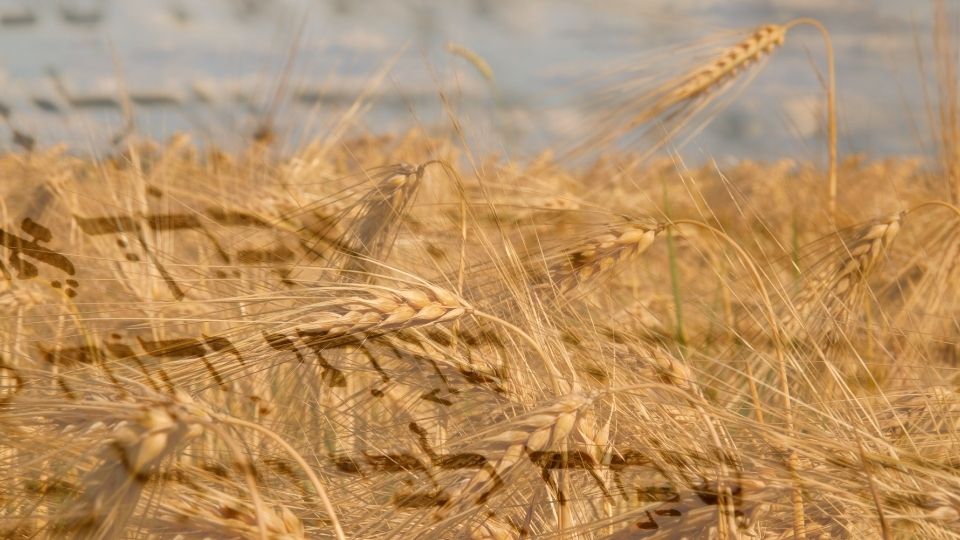
Wheat stalks
Milk jug or pitcher
Fruits and green branches
Fire / flame — recalling the divine revelation at Mount Sinai
Shavuot in Biblical times
Shavuot in the Time of the Temple
During the days of the Holy Temple, Shavuot (the Feast of Weeks) was no less vibrant and joyous than Pesach or Sukkot.
The latter two festivals have retained their striking traditions even into our time — the Pesach Seder, the Sukkah and the Water-Drawing Celebration (Simchat Beit ha-Sho’eva).
But let us now pause and marvel at the splendor of Shavuot as it was celebrated in the days of the Temple!
The Counting of the Omer – Sefirat haOmer
The harvest season in the Land of Israel lasted from Pesach until Shavuot.
On Pesach, the first sheaf of barley — the Omer — was presented in the Temple as a wave offering before the Eternal.
According to the commandment, seven full weeks were to be counted from that offering.
During these weeks the barley harvest was followed by the reaping of wheat and other grains.
The fiftieth day became the Festival of Shavuot, when thanksgiving was brought for the successful harvest and the first fruits of the land.
The word Omer actually denotes a measure of volume (approximately 2.2 liters), yet in the commandment it also refers to the sheaf itself that was lifted before the LORD.
Naturally, during harvest time, everyone was counting these sheaves — and thus the season itself became known as the Counting of the Omer.
In this same period, farmers would tie a cord around the first ripening fruits of their trees, marking them as Bikkurim, to be presented later as the “first fruits” offering on the festival.
Pilgrimage to the Temple
Shavuot was a grand and joyous pilgrimage (Aliyah la-Regel).
From every region of the Land, groups of pilgrims would set out together, carrying baskets upon their shoulders filled with grain, barley, and the first produce of their trees.
As they approached Jerusalem, the priests and Levites came out to meet them with songs and psalms, accompanying them all the way to the Temple courts.
Jerusalem was adorned like a bride; its streets overflowed with fruits and fragrance.
Bikkurim – The Firstfruits Offering
Here, in the Temple, the pilgrims would recite Israel’s ancient historical confession — the Mikra Bikkurim:
“My father was a wandering Aramean.
He went down to Egypt and lived there as a stranger, few in number,
but there he became a great and mighty nation.
The Egyptians dealt harshly with us and afflicted us, imposing hard labor upon us.
Then we cried out to the LORD, the God of our fathers,
and the LORD heard our voice and saw our affliction, our toil, and our oppression.
The LORD brought us out of Egypt with a mighty hand and an outstretched arm,
with great terror, signs, and wonders.
He brought us to this place and gave us this land,
a land flowing with milk and honey.
And now, behold, I bring the first fruits of the soil which You, O LORD, have given me.”
(Deuteronomy 26:5–10)
After the offering came rejoicing and a festive banquet, shared with family, Levites, and strangers alike.
The Two Loaves – Shtei haLechem
One of the festival’s most unique commandments was the presentation — and waving — of two leavened loaves (Shtei Lechem) before the Presence of the Eternal.
This is remarkable, for throughout Scripture leaven (chametz) usually symbolizes sin or corruption.
At Pesach, all leaven must be removed from the home, symbolizing the cleansing of impurity.
Yet here, the leaven becomes a symbol of abundance and renewal.
At Pesach the old leaven was purged away; by Shavuot, a new leaven has risen — the sign of a new harvest year, of soft, fragrant bread that evokes gratitude and joy.
Human nature itself contains “leaven” — imperfection and mixed motives.
We can only serve God with our whole being, flaws and all.
As the sages taught:
“At Pesach we cast out the leaven; at Shavuot we sanctify it.”
(Pesikta Rabbati 20)
What Might the Two Loaves Symbolize?
The two harvests: barley and wheat
The two Tablets of the Covenant
Torah and the commandments (Mitzvot)
The two Temples in Israel’s history
The Kohanim and the rest of Israel’s tribes
Israel and the nations
“Two loaves, yet one fragrance — for before the LORD, all life shall become as one bread.”
(Zohar, Emor 98b)
- Dátum: 3.22. | Niszán 4
- Ünnepek:—
- Tóra: 3Móz 1:14–2:6
- Neviim: Ézs 1 :18-31
- Ketuvim: Zsolt 124
- Újszövetség: Csel 2:1-21
- Hetiszakasz:
Mikor van Savuot?
—
—
Kapcsolódó

“Kezdd azzal, hogy megtartasz egyetlen micvát, és máris jobbá tetted …
Cuki-isten, vagy izomláz? „Szóval, azt gondolom, hogy az Istenhit, az …


The Shavuot today
Shavuot After the Destruction of the Temple
With the destruction of the Temple, the commandments described above could no longer be fulfilled.
Along with them, much of the festival’s former splendor and the joy of communal participation were also lost.
Yet Shavuot remains a fascinating and spiritually rich celebration even today.
Counting the Omer – Sefirat haOmer
Because the Torah commands literally, “U’sfartem lachem” — “You shall count for yourselves…” (Leviticus 23:15) —
the seven weeks and the fiftieth day are not merely marked off on a calendar, but are actively counted day by day.
The practice traditionally follows this pattern:
a) The Blessing
“Blessed are You, Adonai our God, King of the Universe,
who has sanctified us with His commandments and commanded us concerning the counting of the Omer.”
(בָּרוּךְ אַתָּה יְיָ אֱלֹהֵינוּ מֶלֶךְ הָעוֹלָם, אֲשֶׁר קִדְּשָׁנוּ בְּמִצְוֹתָיו וְצִוָּנוּ עַל סְפִירַת הָעֹמֶר)
b) The Daily Count
“Today is the Xth day of the Omer, which is X weeks and Y days.”
For example:
“Today is the twenty-third day, which is three weeks and two days of the Omer.”
Each day’s count is recited after nightfall, creating a rhythm of spiritual anticipation that links Pesach to Shavuot.
Decoration
It is customary to adorn synagogues and community spaces with green branches and flowers, recalling the Midrashic tradition that Mount Sinai itself blossomed with vegetation when God gave the Torah and entered into covenant with Israel.
These decorations symbolize life, renewal, and divine revelation.
Reading of the Book of Ruth
The Bible contains five scrolls (Chamesh Megillot) that are each read on specific festivals:
Song of Songs, Ruth, Lamentations, Ecclesiastes, and Esther.
A simple mnemonic recalls them in Hebrew order:
“Ruth sings the preacher’s lament for Esther” — i.e., Ruth, Song of Songs, Ecclesiastes, Lamentations, Esther.
The Book of Ruth is read on Shavuot because its story takes place during the harvest season, and its themes of covenant loyalty and inclusion mirror the essence of the festival.
Tikkun Leil Shavuot – All-Night Study
According to tradition, the Israelites fell asleep at Mount Sinai on the very night before receiving the Torah.
To “repair” (tikkun) this lapse, it became customary for communities to remain awake throughout the night of Shavuot,
dedicating the hours to the study of Torah.
Today, a Tikkun Leil Shavuot often includes not only readings and commentaries from the Torah and Talmud,
but also lectures and discussions on topics related to Judaism, Israel, and the Bible.
It is a night of shared learning, joy, and spiritual awakening — a reenactment of standing once more before Sinai.
Shavuot and Pentecost
There is no mistake here: the Christian festival of Pentecost is, in fact, the Greek name for the Jewish festival of Shavuot.
As noted earlier, the word Πεντηκοστή – Pentēkostē (from which the English “Pentecost” and Hungarian “Pünkösd” derive) simply means “fiftieth.”
It was the term used by the Greek-speaking Jewish community for Chag Shavuot — the Feast of Weeks.
Technically, both the Jewish and Christian calendars mark the festival on the fiftieth day after Passover (Pesach), following the very counting prescribed in the Torah.
The New Covenant Account
The New Covenant (Brit Chadashah) records that it was precisely on the day of Shavuot that the pilgrim crowds had gathered in Jerusalem when Yeshua’s disciples experienced an extraordinary spiritual encounter:
a mighty sound like a rushing wind, the trembling of the ground, and tongues of fire that appeared and rested upon each of them.
They were suddenly empowered to speak in the native languages of all who were present —
creating a miraculous unity among the Jewish people, who at that time were scattered across lands and languages.
That day, about three thousand people joined them in following Yeshua.
Thus was born the first Messianic qahal — the earliest community of Yeshua’s followers,
often rendered in later Greek as ekklēsia, and in most modern languages simply as church.
The First Messianic Community
This qahal, however, looked nothing like the later image of bells, incense, and vestments that the word “church” may evoke today.
It was a vibrant, grassroots Jewish fellowship.
They went up daily to the Temple (Beit HaMikdash) at the appointed hours of prayer,
and gathered in small groups to bless bread and share meals together.
They listened to the stories of Yeshua and studied the words of the TaNaKh — the Torah, the Prophets, and the Writings.
Those who knew them regarded them simply as a thriving, dynamic Jewish community within Jerusalem.
After all, following Yeshua — the promised Messiah of Israel — was, in every sense, a profoundly Jewish thing to do. Isn’t it self-evident?
Jesus in the Feast of Shavuot
The Counting of the Omer – A Season of Expectation
The Counting of the Omer is a season of waiting.
After presenting the first sheaf of barley, we cannot yet see the full harvest — but we believe that it will be abundant, and that the year will end in blessing.
The TaNaKh promises that there will be a resurrection, and that the righteous will partake in the World to Come (Olam haBa).
So far, however, only one Man has risen from the dead.
Yeshua (Jesus) is the firstfruits of the resurrection of the righteous.
We, too, wait — trusting that the promises of the Eternal One never fail.
The Harvest – The Ingathering of Israel
Yeshua called Israel to teshuvah — repentance and return.
He welcomed with open arms those who had drifted far from the faith of their fathers,
yet He also confronted the self-righteous with the call to humility and genuine change.
And on that particular Shavuot, in response to Shimon’s (Peter’s) call, three thousand Jews chose teshuvah and and trust in the risen Messiah. They all joined the community.
The harvest had begun.
Fire and Wind
Fire and wind accompanied the revelation of the Eternal both at Mount Sinai and again in Jerusalem.
These symbols are at once awe-inspiring and comforting —
a reminder that God’s presence is both fearsome and full of mercy.
Torah and the Holy Spirit
The Torah is sweet to the soul — sweeter than the cheese blintzes are to the body.
Yet, when we rebel against it, the consequences are painful.
There has never been an age in history when Israel kept the Torah perfectly,
and yet it remains one of our greatest treasures.
Sadly, we have also known the pain of those consequences.
But there is also a promise:
that our God will make a New Covenant with us — new not in content, but in location:
“I will write My Torah upon their hearts.” (Jeremiah 31:33)
This means we will no longer obey out of fear of punishment or consequence,
but because something deep within us has been transformed.
According to this promise, the Ruach haKodesh — the Holy Spirit — will dwell within the entire people,
and we shall know Him.
That is what this festival is truly about.
On that day nearly two thousand years ago, perhaps in one of the Temple courts,
a small, trembling group of Yeshua’s disciples gathered together.
Suddenly, tongues of fire appeared, the ground trembled, the wind roared —
and inside them something changed forever.
That joy, that insight, that holy passion did not fade overnight.
Their lives became filled with miracles and radical transformation.
They lived to see the fulfillment of the promises spoken through Jeremiah and Joel.
The Two Loaves – Why Leavened?
Leaven cannot truly be separated from the dough; it is only a matter of time before fermentation begins even in the purest matzah mixture.
In the same way, the tendency to rebel against God lies hidden within every human heart — even among the children of Israel.
God could have destroyed us, just as we remove and burn the last traces of leaven before Pesach.
Yet He chose instead to sanctify the sinful human being — first the sons of Israel, and then the nations as well.
The Two Loaves – Why Two?
Because the Ruach haKodesh was poured out not only upon Jews,
but within a few years also upon Romans, Greeks, and people of many nations.
At first, Yeshua’s disciples were confused by this strange development.
But soon they reached a Spirit-led conclusion:
Whoever desires to follow Yeshua does not need to become a Jew by formal conversion.
A person from the nations can be a follower of the Messiah —
living righteously, as befits those who seek the truth.
Thus, the two loaves of thanksgiving beautifully symbolize this twofold yet unified people:
Jews and Gentiles, offered together before the LORD as one fragrant offering.
The Book of Ruth
The Book of Ruth carries within it the promise of this world-changing reality.
Ruth, a Moabite woman — from a people formally excluded from conversion to Israel —
was nevertheless accepted because of her truthfulness, loyalty, and love.
Through her faithfulness she found a place within the Messianic lineage itself.
In this sense, the Book of Ruth tears down boundaries.
Ruth and Naomi, who sought refuge under the wings of Israel’s God in their vulnerability,
found their Redeemer.
In the story, that redeemer is Boaz —
the one who buys back the family field, receives the widowed Naomi, and takes Ruth as his wife.
He is a wonderful prefiguration of the Messiah, the Redeemer,
who bore the sins of His people and paid the price for our peace — just as it had been written of Him.
Therefore, it is not a question of where you come from, or what branch of the family tree you belong to.
You may be Jewish, half-Jewish, halakhically defined or merely by ancestry,
or perhaps you are from Székely, Italian, or any other background —
you can still find a home and a new life in the Redeemer.


